More Than Just an Address: The Real Reasons People Are Choosing to Call King Hills Home
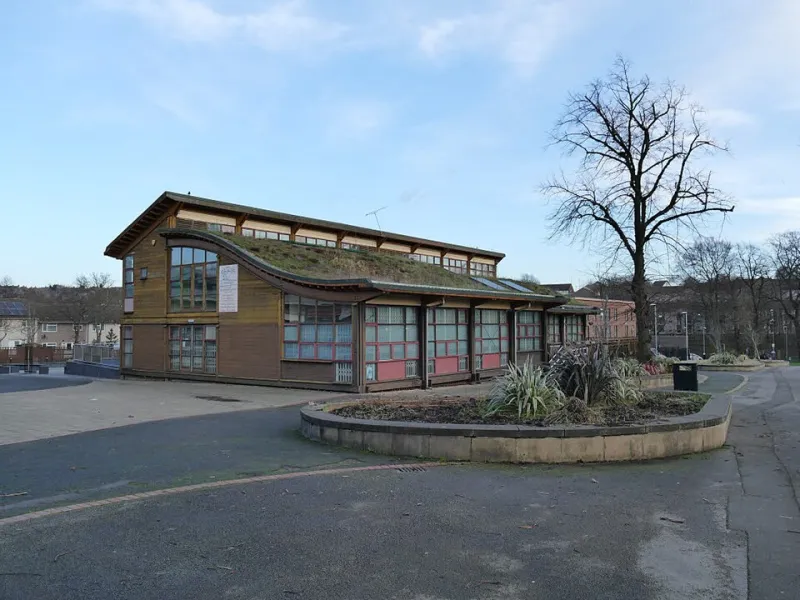
Photo: Stephen Craven, CC BY-SA 2.0, via Wikimedia Commons
There is a particular kind of place that does not need to shout about itself. Its reputation travels quietly, carried in conversations at school gates, in recommendations passed between colleagues, and in the unhurried contentment visible on the faces of people going about their daily lives. King Hills is, by most accounts, that kind of place.
In recent years, however, the whispers have grown louder. Enquiries to local estate agents have increased markedly. Families relocating from larger urban centres are arriving with considered intent rather than resigned compromise. And long-term residents — some of whom have lived here for decades — speak of their neighbourhood with a quiet pride that is entirely unforced.
To understand what lies behind this growing appeal, the King Hills Community spoke with a cross-section of people who know the area best: those who have never left, those who arrived recently, and those who built their livelihoods here.
'It Took About a Week to Feel Like I Belonged'
Sarah, who relocated to King Hills from South East London three years ago with her husband and two young children, recalls her first impressions with characteristic candour. 'I was braced for the adjustment,' she admits. 'We had been in a city our whole adult lives. I assumed there would be a period of feeling like outsiders.'
That period, she says, never really materialised. Within days of moving in, a neighbour had introduced herself, a local WhatsApp group had welcomed the family, and her eldest daughter had been invited to join a weekend football session in the park. 'It sounds almost too wholesome when I say it out loud,' Sarah laughs, 'but it genuinely happened that quickly.'
This quality — the ease with which newcomers are absorbed into the social fabric — comes up repeatedly in conversations about King Hills. It is not something that can be manufactured by a developer or conjured by a marketing campaign. It is, residents suggest, the product of a community that has deliberately cultivated its own character over many years.
Green Space as a Way of Life
One of the most frequently cited attractions of King Hills is its relationship with the natural environment. The area benefits from an unusually generous provision of green space relative to its population density, ranging from formal parkland to wilder, less manicured stretches that have become cherished by walkers, cyclists, and families alike.
David, who has lived in King Hills for over twenty years and serves as a volunteer with a local conservation group, describes the green corridors as 'the lungs of the community.' 'People use them every single day,' he says. 'You see the same faces on the paths — dog walkers, runners, parents with pushchairs. That daily contact builds something. It builds familiarity, and familiarity builds trust.'
For families with children, the proximity to safe, accessible outdoor space is not merely a lifestyle preference — it is a practical consideration that shapes daily routines. Several parents spoken to for this piece cited the ability to walk or cycle to green spaces without crossing major roads as a significant factor in their decision to settle in King Hills.
Schools That Inspire Confidence
Education is, for many families, the single most decisive factor in a relocation decision. King Hills has, over the past several years, developed a strong local offering at both primary and secondary level, with a number of schools receiving favourable assessments from Ofsted and earning positive word-of-mouth reputations among parents.
Clair, whose children attend a local primary school, is measured but enthusiastic in her assessment. 'I did my research before we moved,' she says. 'I visited, I spoke to other parents, I looked at the data. What I found matched what I had been told. The teaching is strong, the ethos is warm, and the children seem genuinely happy to be there.'
Beyond formal academic performance, parents speak of a broader educational culture in King Hills that extends into the community itself — local organisations running after-school programmes, sports clubs with inclusive admission policies, and cultural events that engage young people throughout the year.
Transport Links That Open Up the Region
King Hills occupies a position that its residents describe, without apparent exaggeration, as 'well connected without feeling like a commuter dormitory.' Rail links provide access to major employment centres within a reasonable journey time, whilst local road networks allow for straightforward travel across the wider region.
This balance — connectivity without the attendant noise and transience of a purely transit-oriented settlement — is something that residents value enormously. James, who commutes regularly for work but returns each evening to King Hills, articulates it succinctly: 'I can get where I need to go. But when I come home, I feel like I am actually coming home — not just passing through somewhere.'
The arrival of improved cycling infrastructure in recent years has further enhanced local mobility, with a growing number of residents opting to use bicycles for short journeys rather than cars. This shift has, by several accounts, contributed to a more animated street life — more incidental encounters, more spontaneous conversation, more of the texture that distinguishes a community from a collection of houses.
Local Businesses: The Heartbeat of the High Street
Any honest account of King Hills must include its local commercial life, which occupies a place of genuine affection in the community's self-image. Independent businesses — cafés, bookshops, specialist food retailers, artisan workshops — have not merely survived the pressures that have hollowed out high streets elsewhere; in King Hills, they appear to have flourished.
Marcus, who opened a delicatessen in King Hills five years ago after relocating from the Midlands, credits the community's loyalty as the foundation of his success. 'People here shop with intention,' he explains. 'They come in knowing who they want to support. That is not something you can take for granted, and I do not.'
This relationship between residents and local traders is, by all accounts, reciprocal. Businesses sponsor community events, host fundraisers, and participate in neighbourhood initiatives in ways that reinforce their role as genuine stakeholders rather than commercial tenants. The result is a high street that feels alive — purposeful, varied, and rooted in the specific character of the place it serves.
A Community That Looks After Its Own
Perhaps the most difficult quality to quantify — and yet the one mentioned most consistently — is the sense that King Hills is a community in the fullest sense of the word. Residents describe a neighbourhood where people notice one another, where support is offered without being solicited, and where the collective wellbeing of the area is treated as a shared responsibility.
This manifests in practical ways: a robust network of voluntary organisations, a tradition of neighbourhood watch that operates through genuine mutual concern rather than suspicion, and a culture of civic participation that draws people into local decision-making processes.
'I have lived in places where I did not know my neighbours' names,' reflects Patricia, a retired teacher who has called King Hills home for thirty years. 'Here, I know their names, their children's names, their dogs' names. That might sound trivial, but it is not. It is the difference between living somewhere and belonging somewhere.'
What Prospective Residents Should Know
For those considering a move to King Hills, the picture that emerges from these conversations is an encouraging one — but it is also an honest one. The area is not without its challenges, and the community does not pretend otherwise. Housing demand has placed upward pressure on property prices, and the infrastructure required to support a growing population will require continued investment and advocacy.
What is clear, however, is that the qualities that make King Hills distinctive — its community spirit, its green spaces, its schools, its local businesses, its connectivity — are not accidental. They are the product of people who care about where they live and who invest their time and energy accordingly.
For those prepared to do the same, King Hills offers something that is increasingly rare in contemporary Britain: a genuine sense of place.