Reading the Signals: How Amenity Investment Patterns Reveal King Hills' Next Growth Neighbourhoods
Property markets are rarely as unpredictable as they appear in the moment. Viewed from a sufficient distance, and with attention to the right indicators, the factors that drive value appreciation in a neighbourhood like King Hills follow patterns that are both identifiable and, to a degree, foreseeable. Among the most reliable of those patterns is the relationship between local amenity investment and subsequent price movement.
The logic is intuitive enough: when a neighbourhood acquires a new community facility, a well-regarded independent business, or improved public infrastructure, it becomes more attractive to a broader pool of residents. Greater demand, concentrated in an area with a relatively fixed housing stock, tends to express itself as upward pressure on prices. What is less often appreciated is the degree to which this process follows a consistent sequence—and the extent to which that sequence can be tracked in real time.
How the Cycle Has Played Out Historically
A review of King Hills' development over the past two decades reveals a recurring pattern. In each case, a cluster of investment activity—whether in the form of planning approvals, business openings, or public realm improvements—preceded a period of above-average price growth in the immediately surrounding streets by approximately eighteen months to three years.
The mechanism is not mysterious. Investment in amenities signals confidence in an area. That signal attracts buyers who might previously have considered the location marginal. Their interest increases competition for available properties, and prices respond accordingly. By the time the improvement is fully established and widely recognised, much of the price adjustment has already occurred.
This is the essential insight for those seeking to benefit from King Hills' investment cycles: the optimal moment to act is during the signal phase, not after the appreciation has become a matter of public record.
The Current Investment Landscape
King Hills is presently in a period of notable activity across several dimensions of community investment. Planning applications that have been submitted or approved in recent months point to a number of developments that, taken individually, might appear modest but collectively suggest a neighbourhood in the early stages of a recognisable cycle.
Among the most significant indicators are proposals for improvements to local green spaces in the northern part of the area, where a combination of additional planting, improved footpaths, and new seating has been proposed as part of a broader public realm initiative. Historically, investments of this kind in King Hills have correlated with heightened buyer interest in adjacent residential streets within twelve to eighteen months of completion.
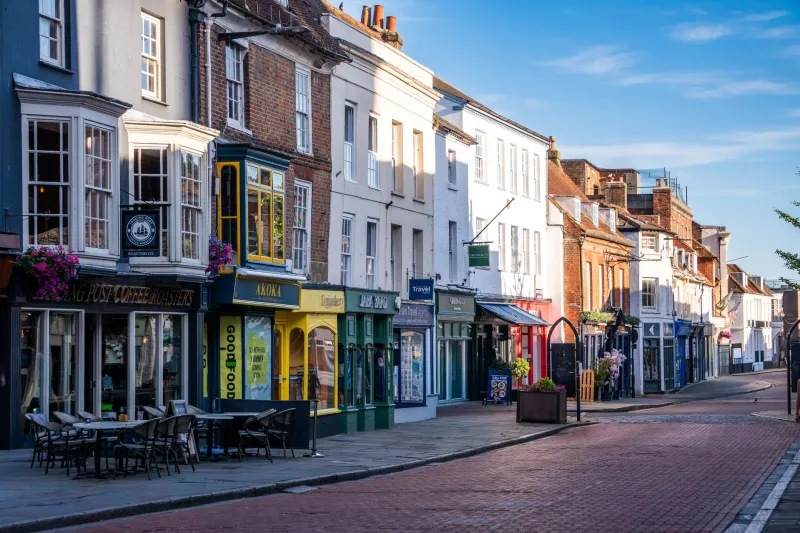
Separately, several independent businesses have opened or announced their intention to open in the local high street, including a café, a specialist food retailer, and a community arts space. The arrival of such businesses is widely understood among property professionals as a leading indicator of neighbourhood trajectory—a sign that entrepreneurs believe sufficient spending power and community engagement exist to sustain their ventures.
Infrastructure Improvements as a Longer-Term Signal
Beyond individual amenity additions, infrastructure improvements carry particular weight as predictors of sustained appreciation. Road resurfacing programmes, cycle lane installations, and improvements to pedestrian crossings may appear mundane in isolation, but they reflect a level of public investment that tends to attract further private investment in its wake.
King Hills has benefited from this dynamic on previous occasions. The improvement of a key pedestrian route several years ago was followed by a notable increase in footfall to the businesses it connected, a rise in demand for properties within comfortable walking distance, and—ultimately—a measurable uptick in average sale prices across the affected streets.
Residents and investors who paid attention to the planning notices at the time of that improvement, rather than waiting for the price data to confirm it, were in a position to act before the broader market had fully processed the implication.
Which Neighbourhoods to Watch
Applying the historical pattern to the current investment landscape, a number of King Hills micro-neighbourhoods appear particularly well positioned for the next phase of appreciation. Streets in proximity to the planned green space improvements, and those within easy reach of the emerging independent business cluster, share the characteristics that have preceded value growth in previous cycles.
It is worth noting that this analysis does not constitute a guarantee of appreciation—property markets are subject to broader economic forces that no local pattern can entirely override. What it does suggest is a framework for distinguishing between parts of King Hills where investment momentum is building and those where it is not, at a moment when that distinction is not yet fully reflected in asking prices.
Timing Decisions Around the Cycle
For existing King Hills homeowners, the investment cycle has implications beyond the decision of whether to buy. Those considering significant renovation works might reasonably time their investment to coincide with periods of rising local amenity confidence—not because the improvements themselves become cheaper, but because the market conditions that reward well-presented properties are most favourable when broader neighbourhood momentum is positive.
Similarly, those contemplating a sale within the next three to five years may find it worthwhile to monitor the progress of current investment initiatives closely. A property that comes to market once a planned community facility is open and operational—rather than merely approved—is likely to benefit from a buyer pool that can see, rather than merely imagine, the neighbourhood's improved character.
Community Investment as a Collective Asset
There is a dimension to this analysis that extends beyond individual financial calculation. The amenity investments that drive King Hills' value cycles are, in most cases, the product of collective effort—by local councillors, community organisations, business owners, and residents who advocate for improvements to the area they share.
The property value that results from those investments is, in this sense, a form of shared return on collective action. Understanding the cycle is not merely a tool for personal financial planning; it is a reminder of the degree to which the character and value of King Hills are shaped by the engagement of its community. Those who participate in that community—attending consultations, supporting local businesses, contributing to improvement initiatives—are not only enriching their daily lives. They are, in a very practical sense, investing in the neighbourhood's future.