Good Neighbours, Greater Value: The Social Fabric Behind King Hills' Property Premiums
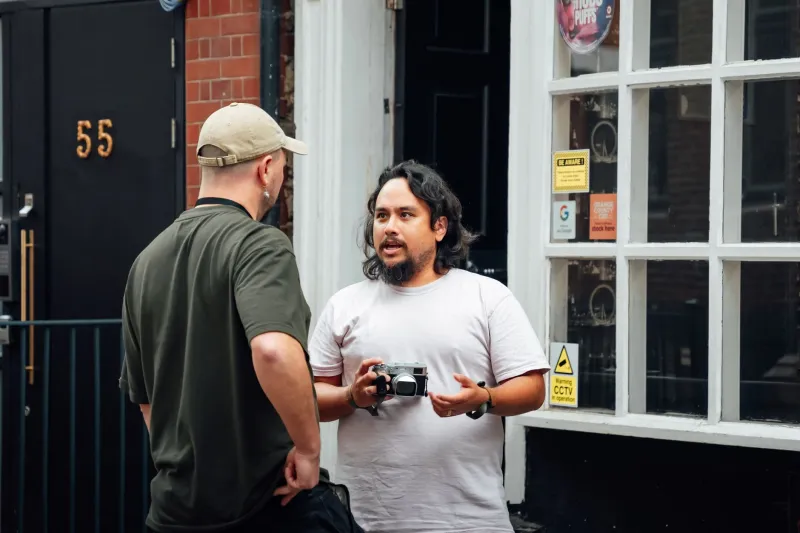
When prospective buyers begin their search in King Hills, they often arrive with a checklist: square footage, proximity to schools, transport links, garden size. What they rarely anticipate is the moment they step out of a viewing and are greeted by a neighbour who knows their name — or walk past a noticeboard dense with community events, volunteer rosters, and local business cards. Yet it is precisely these intangible qualities that, according to both property professionals and academic research, can add thousands of pounds to the value of a home.
The relationship between community cohesion and property prices is not merely anecdotal. A growing body of evidence — including studies from the Royal Institution of Chartered Surveyors and the Joseph Rowntree Foundation — suggests that areas characterised by high levels of social trust, civic participation, and mutual support consistently outperform comparable neighbourhoods in both sale prices and time on market. King Hills, with its distinctive blend of established residents and newer arrivals, offers a compelling case study in how social capital becomes financial capital.
What Estate Agents Are Observing on the Ground
Local property professionals are candid about the role community plays in buyer decision-making. Properties situated within streets that have active residents' associations or well-maintained communal spaces consistently attract more competitive offers, and they tend to sell more quickly than equivalent homes in less cohesive pockets of the area.
This is not simply a matter of aesthetics. Buyers who attend viewings in King Hills frequently report that conversations with neighbours during or after a visit prove decisive. When a prospective purchaser learns that the street organises a seasonal litter pick, that there is an informal WhatsApp group for sharing local information, or that residents collectively lobbied the council for improved street lighting — these details communicate something that no floor plan can convey: that the people here are invested in where they live.
Investment in place, it turns out, is contagious. And it is increasingly priced accordingly.
The Residents' Association Effect
King Hills is home to several active residents' associations, each with its own character and focus. Some concentrate on planning matters, scrutinising local development applications and ensuring that the area's architectural identity is preserved. Others organise social calendars — summer fêtes, winter markets, neighbourhood clean-up mornings — that foster the kind of familiarity between residents that makes a street feel genuinely safe.
The link between organised community groups and property premiums is well documented. Research published by the think tank Demos found that streets with demonstrable civic activity — measured by participation in local groups, voter turnout, and voluntary sector engagement — commanded price premiums of between three and five per cent compared to demographically similar streets without such infrastructure.
For a property valued at £350,000 in King Hills, that differential represents between £10,500 and £17,500. It is, by any measure, a meaningful sum — and one that costs nothing to generate beyond the willingness of residents to participate.
Safety, Perception, and the Walk-Away Factor
One of the most immediate ways in which community spirit translates into financial value is through the perception — and reality — of safety. Neighbourhood Watch schemes, active in several parts of King Hills, do more than reduce the incidence of opportunistic crime. They alter the way a street feels to someone encountering it for the first time.
Estimating the precise value of perceived safety is difficult, but research from the University of Cambridge's Centre for Housing and Planning Research has indicated that buyer willingness-to-pay increases measurably in areas where residents report high levels of trust in their neighbours and confidence in the local environment. The so-called 'walk-away factor' — the proportion of buyers who decline to proceed after an initial visit — is substantially lower in areas where that confidence is evident.
In King Hills, streets that have invested in coordinated safety initiatives, well-lit communal areas, and visible community presence report fewer abandoned sales and shorter chains. For sellers, this translates directly into reduced stress and, in many cases, a stronger final price.
Events, Identity, and the Premium of Belonging
Community events serve a function that extends well beyond entertainment. They are, in effect, a form of place marketing — a visible demonstration that a neighbourhood has a shared identity and that its residents choose to spend time together rather than simply coexist.
The King Hills calendar features a range of such gatherings throughout the year: open garden weekends, local history walks, seasonal markets, and charity fundraisers that draw participation from across the area. For buyers relocating from elsewhere in the UK — or from abroad — these events offer reassurance that they are not simply purchasing a property but joining a community.
This sense of belonging carries genuine commercial weight. A 2022 survey by Rightmove found that 'community feel' ranked among the top five factors cited by buyers when explaining their final choice of location, ahead of proximity to retail and behind only schools and transport. In areas where that community feel is actively cultivated, rather than simply inherited, the premium is more durable — less susceptible to the fluctuations that affect markets driven purely by infrastructure or convenience.
Mutual Support Networks as a Practical Asset
Beyond organised events and formal associations, King Hills benefits from a dense network of informal mutual support — the kind that rarely appears in property listings but is noticed immediately by those who experience it. Residents who look after one another's deliveries, share recommendations for reliable tradespeople, or coordinate care for elderly neighbours create an environment that is practically as well as emotionally valuable.
For families with young children, for older residents seeking to age in place, and for working professionals who travel frequently, this informal infrastructure reduces the friction of daily life in ways that are difficult to quantify but easy to appreciate. It also contributes to lower turnover: residents who feel supported are less likely to move, which in turn stabilises the social fabric and maintains the very conditions that attract buyers in the first place.
Investing in Community as a Property Strategy
For current King Hills homeowners, the implication is straightforward: participation in community life is not merely a civic virtue. It is, in a very practical sense, an investment in the value of one's own home.
Attending a residents' association meeting, joining a neighbourhood clean-up, or simply introducing oneself to a new neighbour contributes to the collective social capital that makes King Hills attractive to buyers. Unlike a kitchen renovation or a loft conversion, this form of investment requires no planning permission, no contractor, and no capital outlay. It requires only time and the recognition that the neighbourhood one inhabits is, in part, a shared asset.
For those considering a purchase in King Hills, the advice is equally clear: look beyond the property itself. Speak to residents. Attend a local event if timing permits. Observe how the street is maintained, how neighbours interact, and whether there is evidence of organised community activity. These are not soft signals. They are indicators of a neighbourhood that is likely to hold its value — and quite possibly increase it — over the years ahead.
In King Hills, as in the best communities across the UK, the people next door are part of the proposition. And increasingly, they are part of the price.