The Independent Spirit: How King Hills' Emerging Local Businesses Are Quietly Lifting Property Values

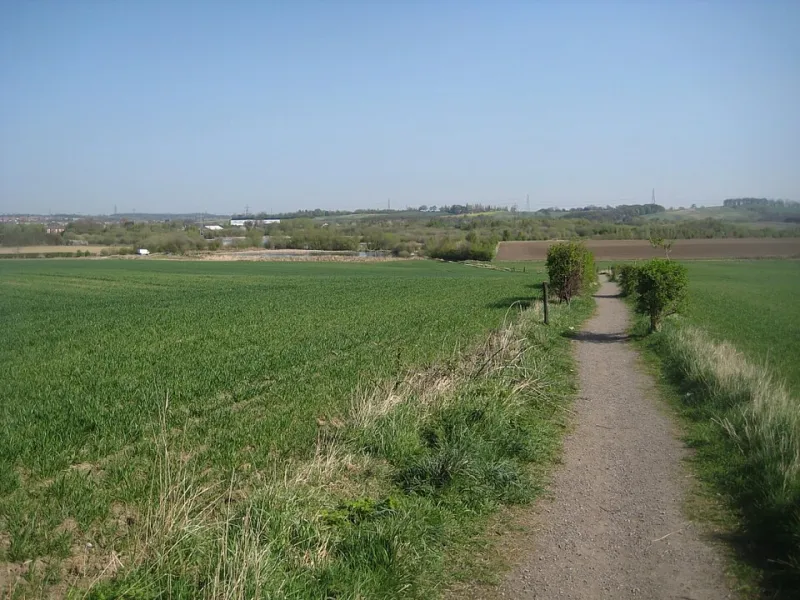
Photo: xReDeYe, CC BY 2.0, via Wikimedia Commons
There is a particular quality that distinguishes a neighbourhood people merely live in from one they genuinely belong to. In King Hills, that quality has been growing steadily, nurtured not by large-scale regeneration schemes or corporate investment, but by the quieter, more personal efforts of independent business owners who have chosen to plant their flags here.
From the coffee shop that has become a de facto community living room to the independent bookshop that hosts monthly reading evenings, King Hills' commercial landscape is evolving in ways that are both visible to residents and increasingly legible to property professionals. The relationship between a thriving local economy and residential desirability is well established in urban geography — and King Hills is offering a compelling local illustration of that dynamic.
A Changing High Street Narrative
The story of the British high street over the past decade has, in many towns, been one of attrition. Chain closures, vacant units, and the relentless migration of spending online have left many commercial centres diminished. King Hills has not been entirely insulated from these pressures, but the response from its independent business community has been notably energetic.
Where larger retailers have retreated, independent operators have moved in — often taking on premises at rents that reflect current realities rather than pre-pandemic optimism. The result is a commercial offer that feels curated rather than corporate: a deli that sources from local producers, a plant shop that doubles as a neighbourhood meeting point, a barber whose walls double as a gallery for local artists.
This is not mere aesthetic charm. Research consistently demonstrates that areas with strong independent retail and hospitality offerings command measurable premiums in both sale and rental markets. Buyers, particularly those relocating from more urbanised areas, actively seek out neighbourhoods where daily life can be conducted locally and with a degree of character. King Hills is increasingly ticking that box.
Voices from the Ground
Speaking with those who have chosen to open businesses in King Hills reveals a consistent thread: they came for the community and stayed because of it.
One café owner, who opened her doors on one of King Hills' principal streets some three years ago, describes the decision as intuitive. "I'd been looking at several areas, and what struck me about King Hills was that people actually knew their neighbours. There was already a sense of loyalty to local businesses — people wanted somewhere to go that wasn't a chain, and they were willing to support it if it was done properly."
Her assessment of the subsequent years is candid. Trade built gradually, sustained not by passing footfall alone but by a core of regulars who treat the café as an extension of their own living space. She has since introduced a weekly community noticeboard — a physical one, deliberately analogue — which has become something of an institution among local residents.
A few doors along, the owner of an independent cookware and homeware shop echoes this sentiment. Having previously operated online only, he made the move to a physical premises in King Hills after identifying what he describes as a "gap between what people here were spending on their homes and what they could actually buy locally." His shop now stocks a thoughtfully edited range of kitchen goods and home accessories, and has attracted a loyal customer base that extends well beyond the immediate neighbourhood.
"People come in and spend time," he says. "They're not rushing. That tells you something about the kind of place King Hills is becoming."
What This Means for Property Demand
For those considering a property purchase or rental investment in King Hills, the growth of this independent commercial layer is more than a pleasant backdrop — it is a substantive driver of demand.
Letting agents active in the area report that prospective tenants, particularly those in the 28 to 40 age bracket, increasingly cite walkability and the quality of local amenities as primary criteria when selecting a neighbourhood. King Hills' emerging café culture, its growing roster of independent food and drink outlets, and the general sense of a neighbourhood with a distinct identity are all factors that agents are hearing referenced in viewings and enquiries.
This translates, in practical terms, into reduced void periods for landlords and a tenant profile that tends towards longer tenancies. A renter who has built a routine around local businesses — a morning coffee here, a weekly shop there — is a renter who has, in effect, invested emotionally in a neighbourhood. That emotional investment is a powerful retention mechanism.
For owner-occupiers, the dynamic is slightly different but equally significant. The presence of a thriving independent economy signals confidence in an area's trajectory. It attracts further investment — from residents improving their homes, from additional businesses seeking to establish themselves, and eventually from buyers willing to pay a premium to be part of a neighbourhood that feels alive.
The Ripple Effect: How Local Commerce Shapes Streets
The influence of commercial activity on residential values is rarely confined to the immediate vicinity of a high street or parade. In King Hills, the presence of well-regarded independent businesses has begun to influence perceptions of entire streets and postcodes.
Estates agents have noted that properties within comfortable walking distance of King Hills' most established independent clusters are generating stronger interest at offer stage than equivalent properties that sit further from the commercial core. This is a pattern familiar to property professionals in areas like Margate's Cliftonville, Chorlton in Manchester, or Bristol's Stokes Croft — all neighbourhoods where independent commercial activity preceded and then accelerated residential price growth.
King Hills is not yet in the same conversation as those established examples, but the directional signals are consistent.
Supporting the Ecosystem
For residents, there is a meaningful role to play in sustaining this commercial momentum. Independent businesses in King Hills, as elsewhere, are dependent on consistent local custom to remain viable. The economics of a small independent operator leave little margin for error, and even a modest shift in spending habits — towards online delivery, for instance, or towards a larger out-of-town retailer — can have disproportionate consequences.
The community organisations and residents who choose to spend locally are, in a very direct sense, investing in the conditions that make King Hills an attractive place to live. That investment has a return that is both tangible — in the form of sustained or improved property values — and intangible, in the form of a neighbourhood that retains its character and cohesion.
A Neighbourhood Finding Its Voice
King Hills has always possessed the underlying qualities that make for a desirable place to live. What is changing is the visibility of those qualities — the way in which a growing constellation of independent businesses is giving the area a commercial identity to match its residential one.
For buyers, renters, and investors alike, this emerging character is not a footnote to the property story of King Hills. Increasingly, it is the story.