Bricks, Belonging, and Buyer Premiums: How King Hills' Character Becomes Currency
There is a moment, familiar to many who have moved to King Hills, when a prospective buyer steps out of the car, pauses on the pavement, and simply looks. Before a single room has been inspected or a floor plan consulted, something registers. It is not easily quantified on a property portal, yet estate agents across the area will confirm that it is frequently the deciding factor. King Hills possesses what the industry increasingly refers to as identity value — a measurable premium attached not to bricks and mortar alone, but to the accumulated character of a place.
This article examines precisely how that character is formed, how it is perceived by buyers, and why it consistently translates into prices that outpace comparable properties in neighbouring areas.
The Architecture Speaks Before the Agent Does
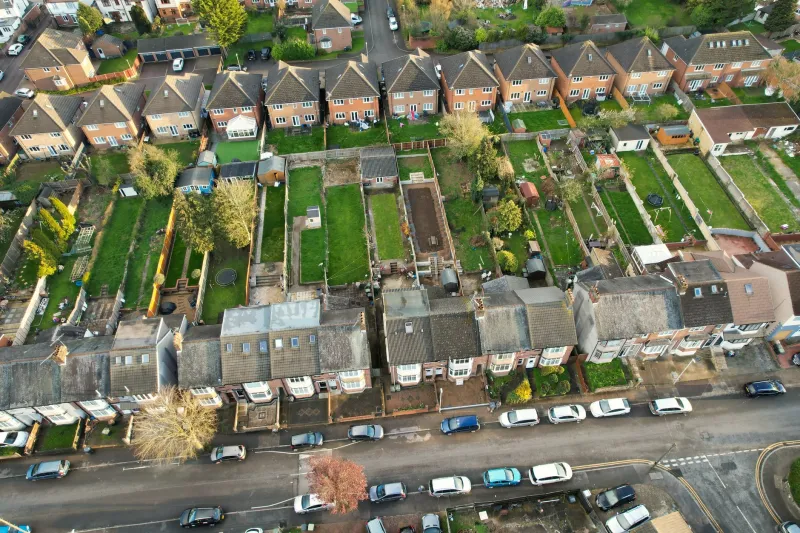
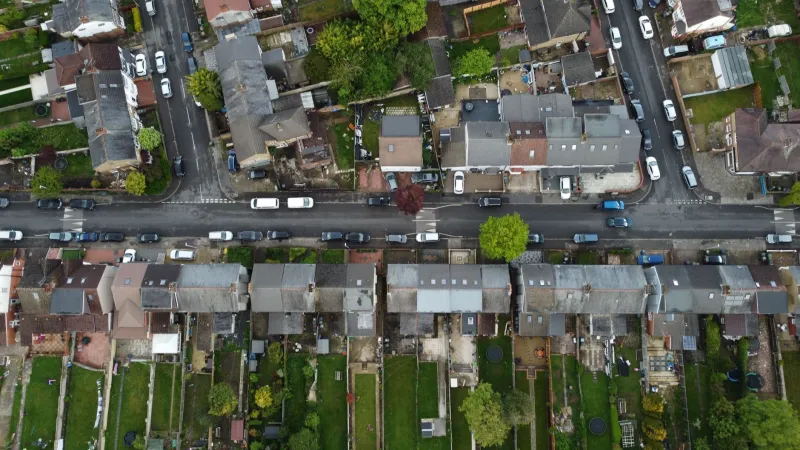
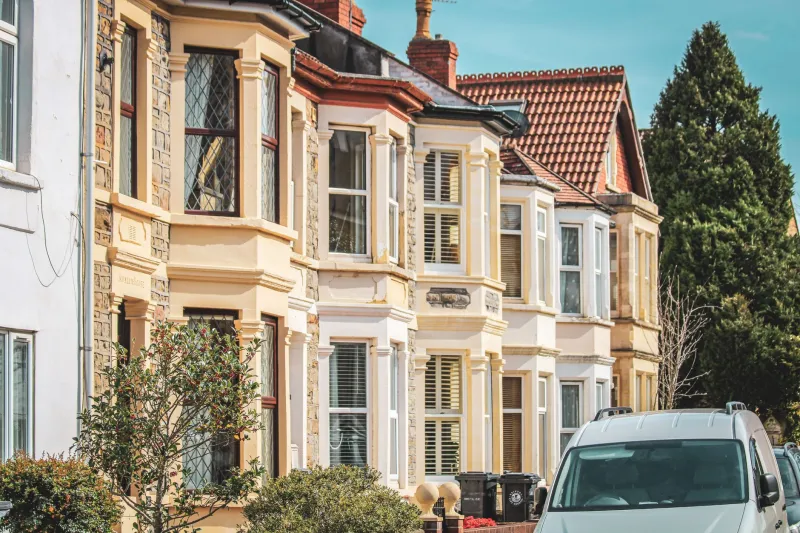
Walk through the older residential streets of King Hills and a coherent visual language emerges. The period detailing — decorative brickwork, bay windows, original ironwork gates — is not merely aesthetic. It signals continuity. Buyers, particularly those relocating from cities where developers have replaced heritage stock with uniform new-builds, respond to this continuity with something approaching relief.
Local estate agent Patricia Howe, who has operated in the King Hills market for over eighteen years, puts it plainly: "When a buyer sees that the streetscape has been respected over generations, they understand instinctively that the community values what it has. That sense of custodianship is enormously reassuring to someone about to make the largest financial commitment of their life."
The significance extends beyond sentiment. A 2023 analysis of comparable sales data in the wider region demonstrated that streets retaining pre-war architectural coherence commanded asking prices between eight and fourteen per cent above those on streets where demolition and infill had disrupted the original character. King Hills, where local planning policy has historically favoured sensitive development, sits firmly in the former category.
Local Landmarks as Psychological Anchors
Every settled community has its reference points — the church spire visible from three roads away, the Victorian market hall that doubles as a Saturday gathering place, the green where the annual fête has been held since before most residents were born. In King Hills, these landmarks function as more than navigational aids. They serve as psychological anchors, giving residents and prospective buyers a framework of permanence within which individual properties gain meaning.
David Cartwright, a local historian who has documented the development of King Hills across four decades of research, argues that landmarks perform an underappreciated economic function. "People do not simply buy a house," he explains. "They buy into a narrative. When a buyer can point to a building or a space and say 'this has been part of this community for a hundred years', they are also saying that their investment is embedded in something durable. That durability has a price."
Cartwright draws particular attention to the role of civic infrastructure — libraries, community halls, historic public houses — in sustaining this narrative. Areas that lose such infrastructure, he notes, often experience a corresponding softening of buyer confidence that eventually registers in sale prices.
Long-Term Residents and the Transfer of Trust
One of the less obvious mechanisms by which community identity influences property values is the behaviour of long-term residents during the sales process itself. In King Hills, it is not uncommon for neighbours to introduce themselves to viewers, to speak warmly and without prompting about the street, the annual events, the informal networks of mutual support. Estate agents describe this as organic social proof — and they regard it as more persuasive than any marketing brochure.
Margaret Osei, who has lived in the same King Hills property for twenty-three years and has witnessed numerous sales on her road, reflects on this dynamic with some amusement. "I've had neighbours tell me that buyers made their decision in the first ten minutes of talking to me at the gate. I wasn't trying to sell anything. I was just being honest about what it's like to live here. But I suppose that honesty is exactly what people are looking for."
This word-of-mouth dimension of community identity is difficult to manufacture and impossible to replicate quickly. It accrues over time, through consistent investment in local relationships, shared spaces, and civic participation. King Hills benefits from a resident base with notably low turnover in its established streets — a pattern that itself signals confidence in the area and reinforces the identity that draws new buyers in.
The Estate Agent's Perspective: Selling a Feeling
For property professionals, articulating King Hills' identity premium to clients requires a particular kind of fluency. The standard metrics — bedroom count, proximity to transport, energy performance rating — remain relevant, but they do not fully account for what buyers are responding to.
"I always tell vendors that King Hills sells itself if you let it," says Patricia Howe. "My job is to make sure the property doesn't get in the way of that. If someone walks into a house that has been over-modernised to the point where it feels anonymous, they lose the connection to the street, to the neighbourhood, to the whole reason they came here. Buyers want the home to feel like it belongs in King Hills — not like it could be anywhere."
This observation carries a practical implication for homeowners considering renovation or sale preparation. Improvements that honour the existing character of a property — restoring original features, selecting materials sympathetic to the period, maintaining garden frontages in keeping with the street — tend to yield stronger returns in King Hills than generic modernisation programmes. The premium, in other words, rewards authenticity.
Identity as a Long-Term Investment Thesis
For buyers approaching King Hills as an investment as much as a home, the community identity argument offers a compelling longer-term thesis. Areas defined by strong, legible character tend to demonstrate greater price resilience during market downturns. Buyers who might otherwise negotiate aggressively are reluctant to walk away from a property embedded in a place they genuinely want to live. That reluctance, multiplied across a neighbourhood, produces a floor beneath which values rarely fall.
David Cartwright frames it in historical terms: "King Hills has survived economic cycles that flattened property values elsewhere because the community itself remained intact. When the housing market contracted in the early nineties and again after 2008, this area held up better than most. That is not coincidence. That is character working as capital."
What This Means for Buyers and Sellers Today
For those currently navigating the King Hills market — whether purchasing a first home, upsizing, or evaluating a potential investment — the practical lesson is clear: the identity of this community is not a marketing abstraction. It is a quantifiable component of value, built incrementally through architecture, civic life, and the accumulated decisions of residents who have chosen to invest in the place as well as the property.
Buyers would do well to consider not only the condition of the house they are viewing, but the vitality of the street, the presence of local landmarks, and the character of the wider neighbourhood. Sellers, meanwhile, should recognise that presenting a property in a manner that connects it to the broader King Hills identity — rather than erasing that connection in pursuit of generic appeal — is likely to serve their interests most effectively.
In King Hills, belonging is not merely a quality of life consideration. It is written into the fabric of the buildings, reflected in the sale prices, and confirmed every time a buyer pauses on the pavement and decides, before they have even crossed the threshold, that they are already home.