The Fine Print of Ownership: Understanding Tenure in King Hills

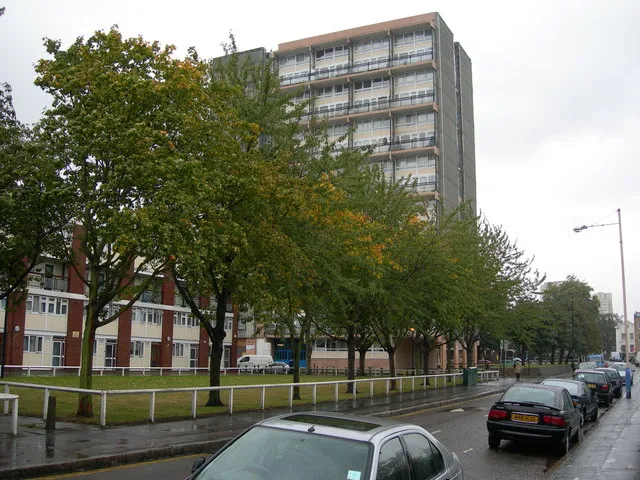
Photo: UK leasehold flat building exterior legal documents, via www.shutterstock.com
Property tenure is often treated as a technical detail to sort out after an offer. In practice, it shapes what you can borrow, what you pay each month and how easily you can sell. Across King Hills, buyers encounter a mixture of freehold houses, leasehold flats and share-of-freehold arrangements. Each can work well, but each requires different questions. A clear understanding of tenure before an offer is not legal pedantry. It is basic commercial judgement.
Freehold: usually straightforward, not always simple
Most houses in King Hills are sold freehold. The owner holds the property and the land beneath it indefinitely, subject to any covenants, easements or legal charges. That is the simplest structure for many buyers, but freehold title is not automatically clean. Check for restrictive covenants that limit extensions or business use, rentcharges, shared access rights and responsibilities for boundary walls or private roads. Some newer estates carry estate management charges for communal areas, which are separate from council tax and can rise over time. A freehold house with unclear shared drainage or a flying freehold over a neighbour's passage may still need careful legal review.
Leasehold: a bundle of rights and obligations
Leasehold is common for flats in mansion blocks, converted houses and newer apartment schemes. The leaseholder owns the property for a fixed term, not the land. The lease is the governing document, and its terms matter as much as the number of years remaining. A long lease of 900 years is very different from a lease of 70 years, both for mortgageability and for resale. Lenders often impose minimum remaining terms, and a short lease can reduce the pool of buyers even before it becomes difficult to extend.
Ground rent is the next check. It may be fixed at a modest sum, or it may contain review clauses that allow escalation. High or doubling ground rents have caused lending difficulties in the past, and buyers should understand exactly what the lease permits. Service charges are equally important. Ask for the current budget, the last three years of accounts, the reserve fund balance and any planned major works. A low service charge can be a false economy if the building has a backlog of repairs.
Building safety is also part of the picture. For flats in taller buildings, lenders and buyers may ask about cladding, fire safety and EWS1 documentation. Lease clauses on subletting, pets, alterations and holiday letting can affect both lifestyle and value. These are not reasons to avoid leasehold altogether. They are reasons to read the lease and ask for the management pack early.
Share of freehold: control with collective responsibility
A share-of-freehold flat is a hybrid. The freehold is owned by a company, and the flat owners are usually shareholders in that company, with a lease for their individual flat. This can give residents more control over management and maintenance, and it may reduce some of the risks associated with an absent landlord. It does not, however, turn the flat into a freehold house. The lease still governs the flat, and the company still has obligations.
Before buying, check the company accounts, the articles of association, the shareholders' agreement and the lease terms. Who are the directors? How are decisions made? Is there a reserve fund? Are any owners refusing to pay? A share-of-freehold arrangement depends on collective goodwill and competent administration. If the company is dormant, poorly documented or embroiled in a dispute, the apparent advantage can disappear.
Checks before you offer
Use a solicitor who is familiar with the local housing stock and ask for the management pack before exchanging contracts. Review the title register, the lease, the ground rent, the service-charge history and any planned works. Check whether the building has a current fire risk assessment and, where relevant, EWS1 documentation. Ask about permissions for alterations, subletting and pets. For share-of-freehold flats, inspect the company file as well as the lease. In King Hills, converted period buildings can be charming but complex, with informal arrangements that were never properly documented. Those arrangements should be regularised before completion, not after.
Enfranchisement and lease extension
Leaseholders may have statutory rights to extend a lease or, collectively, to buy the freehold. The process is technical and the costs are not limited to legal fees. Valuation, survey work and the freeholder's reasonable costs can all affect the final figure. Eligibility rules and timetables matter. A formal route is usually better than an informal conversation, but it should be planned with professional advice. Do not assume that a lease extension will be cheap simply because the ground rent is low.
Mortgages, resale and the long view
Tenure affects the number of willing lenders and buyers. Short leases, high ground rents, cladding issues and poorly run management companies can all narrow the market. Share of freehold can be highly saleable when the company is well organised, but it can also raise questions that require more paperwork. The practical lesson is to think about exit before purchase. If the lease or management arrangements would worry you as a buyer, they will worry the next buyer too.
A practical framework
Ask four questions. What exactly do you own? What must you pay, and how can those payments change? What permissions or restrictions apply? And how easily could you sell or extend the arrangement? Clear answers, supported by documents, are worth more than a reassuring conversation. Tenure is not a box to tick at the end of the purchase. It is part of the property's value from the first viewing.