Spend £10,000 or £30,000 on Your Kitchen? What King Hills Buyers Are Actually Paying For
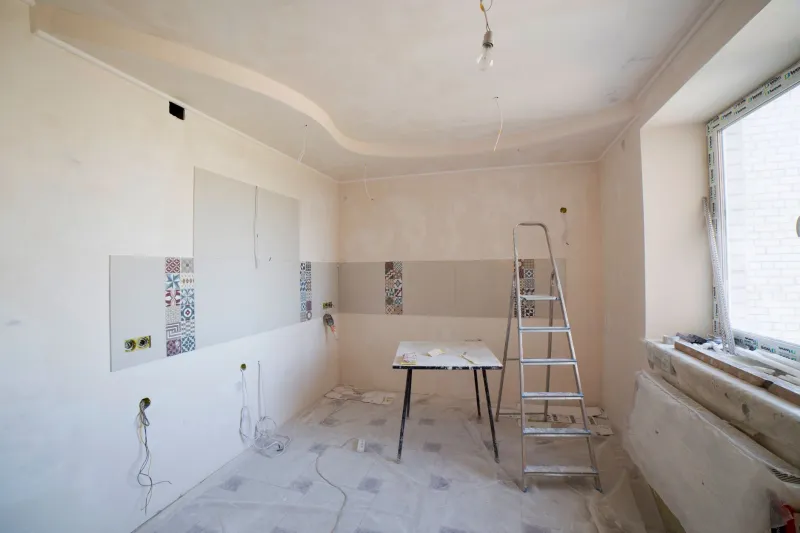
There is a moment familiar to almost every homeowner preparing to sell: standing in the kitchen, weighing whether to repaint the cabinets or replace them entirely. Whether to swap the taps or commission a full refit. The instinct is often to spend more, on the assumption that more investment produces more return. In King Hills, that assumption deserves careful scrutiny.
The relationship between renovation expenditure and sale price is rarely linear. What buyers in this particular neighbourhood value — and what they will actually pay a premium for — does not always align with what feels significant to the person doing the work. Understanding that distinction is the difference between a renovation that serves the sale and one that merely satisfies the seller.
The £10,000 Cosmetic Refresh: Where It Works and Why
A modest kitchen renovation in King Hills — typically in the range of £8,000 to £12,000 — generally covers cabinet repainting or door replacement, new worktops in a mid-range material such as laminate or entry-level quartz, updated integrated handles, and a replacement sink and tap combination. At this level, the transformation can be considerable, particularly in properties from the 1980s and 1990s where original fittings remain.
The evidence from local estate agent feedback and comparable sale data suggests that this tier of investment performs well when the underlying layout and structure of the kitchen are already functional. Buyers in King Hills are increasingly design-aware; they respond to clean lines, neutral palettes, and the absence of visual clutter. A dated kitchen that has been cosmetically refreshed to meet contemporary expectations can reduce buyer hesitation significantly, even if it does not dramatically alter the headline valuation.
Where the cosmetic refresh delivers its clearest return is in properties priced between approximately £280,000 and £420,000 — the mid-market band that represents a large portion of King Hills transactions. At this level, buyers are often stretching financially and have limited appetite for immediate post-purchase expenditure. A kitchen that appears move-in ready removes a perceived cost from their mental accounting, which frequently translates into stronger offers and shorter time on market.
Specific choices matter here. Matt-finish cabinetry in warm neutral tones — think soft white, sage, or greige — consistently outperforms gloss finishes in buyer response within this area. Integrated appliances, even when modest in brand, signal organisation and considered design. Replacing visibly worn flooring with large-format vinyl or porcelain tile completes the impression without requiring structural intervention.
The £25,000–£35,000 Premium Overhaul: When It Earns Its Keep
A full kitchen renovation at the upper end of the budget — encompassing bespoke or semi-bespoke cabinetry, solid stone worktops, high-specification integrated appliances, underfloor heating, and potentially reconfigured layouts — is a different proposition entirely. The question is not whether it looks impressive. It invariably does. The question is whether the King Hills market will pay for it.
The honest answer is: sometimes, and only in the right circumstances.
Premium kitchen renovations tend to recoup their investment most reliably in properties already valued above £550,000, where buyer expectations shift accordingly. In these transactions, the kitchen is not merely a functional space; it is a statement about the property's overall quality. Buyers at this level are comparing against other high-specification homes, and a premium kitchen becomes a genuine differentiator rather than a pleasant addition.
In properties below this threshold, however, the arithmetic becomes less favourable. A £30,000 kitchen installed in a home that might otherwise sell for £380,000 is unlikely to push the final sale price to £410,000. More commonly, it improves buyer enthusiasm and reduces negotiation friction — outcomes that have real value but are difficult to quantify precisely against the capital outlay.
Bespoke cabinetry, in particular, is a category worth examining carefully. Handmade kitchens carry significant emotional appeal and genuine craftsmanship, but buyers rarely pay pound-for-pound for their cost. What they do pay for is the visual coherence and quality of finish that a well-executed bespoke installation provides. If a semi-bespoke option from a reputable national supplier achieves a comparable aesthetic at half the price, it is frequently the more strategically sound choice for a seller.
Bathrooms: A Parallel Calculation
The same framework applies to bathroom renovation, with one important distinction: in King Hills, the number of bathrooms can matter as much as their specification. Properties with a single bathroom face a structural disadvantage in the family buyer market that no amount of premium tiling will fully overcome. Where budget is limited, converting an en suite or adding a second bathroom often produces a more meaningful valuation uplift than upgrading an existing space to a luxury standard.
For existing bathrooms, the evidence points clearly toward mid-range investment as the optimal zone. A bathroom renovation costing between £5,000 and £9,000 — covering a new suite, wall tiling to ceiling height, updated flooring, and quality fixtures — consistently delivers buyer confidence without the diminishing returns associated with heated towel rails, freestanding baths, and designer sanitaryware in properties where the surrounding rooms do not support that level of finish.
Buyers notice coherence. A £15,000 bathroom in a home with original 1990s carpets and single-glazed windows creates a dissonance that experienced viewers find difficult to ignore. Renovation investment works best when it is proportionate and consistent with the overall presentation of the property.
The Fixtures and Finishes That Move the Needle
Across both kitchens and bathrooms, certain specific choices emerge as consistently effective in the King Hills market:
- Tap and fixture quality: Brushed brass and matte black finishes have maintained strong buyer appeal through recent years. Chrome remains safe but no longer distinctive. Budget here is well spent.
- Worktop material: Quartz outperforms laminate in buyer perception at every price point. Even entry-level quartz adds a tactile quality that photographs well and withstands scrutiny during viewings.
- Lighting: Recessed LED lighting in kitchens and bathrooms is now an expectation rather than a luxury. Properties without it appear dated regardless of other upgrades.
- Storage integration: Pull-out larder units, deep pan drawers, and integrated waste solutions register strongly with family buyers. These are functional improvements with clear emotional resonance.
- Grout and sealant condition: Often overlooked, the condition of grouting and sealant in bathrooms has a disproportionate effect on buyer perception. Fresh, clean grouting signals maintenance and care across the entire property.
Making the Decision That Serves Your Sale
The most useful question for any King Hills homeowner considering renovation before sale is not "what can I afford to spend?" but rather "what does this buyer, at this price point, need to see?"
For the majority of properties in the area, a focused cosmetic renovation executed with genuine attention to finish and material quality will serve the sale more effectively than an ambitious overhaul that overshoots market expectations. The goal is not to create the finest kitchen in the street; it is to remove buyer objections, reduce perceived risk, and support a confident, competitive offer.
Where the premium investment is warranted — in higher-value properties, in homes where the kitchen forms a central architectural feature, or in markets where comparable properties have already been upgraded — the calculus shifts. In those cases, underinvesting carries its own risk.
The King Hills market rewards honesty about these distinctions. Speak with a local agent who can provide specific comparable evidence before committing to any significant pre-sale expenditure. The numbers, in most cases, will guide you more reliably than instinct alone.